Case Study Outdoor Build / Web Design
Website Design for Outdoor Living Contractors: The Ridgeline Outdoor Co. Case Study
Client
Ridgeline Outdoor Co.
Location
Southern California
Industry
Fencing & Hardscape
Scope
Web Design + SEO Strategy
28+
Project Inquiries
90
Days to #1 Lead Source
50%
Leads from Web
0
Price-First Conversations
Most fencing and hardscape contractors are still competing for leads with a website that looks like it was built from a $99 template back in 2016. The companies actually winning high-ticket outdoor living projects are the ones whose websites look like the jobs they are trying to land. That gap is what this case study walks through: how we approached both the design and the ongoing SEO strategy for a premium custom outdoor contractor.
The Problem: A Premium Product, An Average Website
Outdoor living contractors in this niche build genuinely high-end work: custom steel and wood fencing, stone patios, retaining walls, pergolas built for luxury residential properties. But almost every competitor site looks the same. Generic hero banners. Stock photography that does not match the actual craftsmanship. Cluttered service lists with no depth on any of them. Contact forms buried three clicks in.
For a niche where the average project size is high and the buying decision is emotional, a templated site actively undersells the work. If a homeowner is choosing between a company with a dark, editorial portfolio site and one with a $99 theme, the first impression carries real weight before a single quote is requested.
"The site has to look like the finished product feels solid, intentional, and built to last."
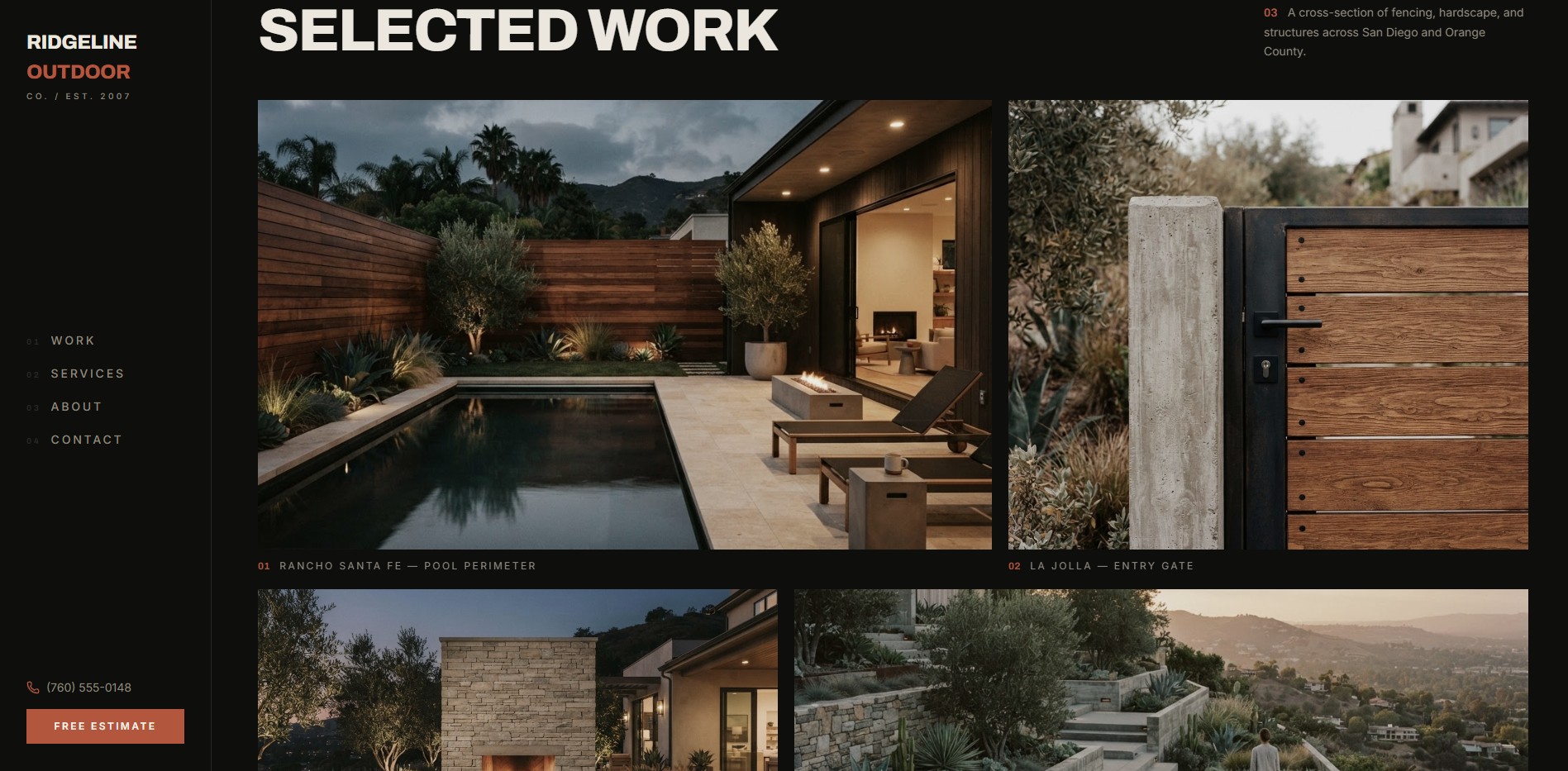
Portfolio section full-width project photography with off-grid placement
The Problem With Most Fencing & Hardscape Websites
When we looked into existing sites in the outdoor living and hardscape contractor space, a pattern showed up pretty quickly. Generic hero banners. Stock photography that does not match the actual craftsmanship being sold. Cluttered service lists. Contact forms buried a few clicks too deep.
For a niche where the average project size is high and the buying decision is emotional it is someone's backyard, their outdoor entertaining space, their home's curb appeal a templated site actively undersells the work.
If you are searching for something like "web design for fencing companies" or "hardscape company website design," this is the core idea: the site has to look like the finished product feels solid and intentional and built to last instead of another stock contractor theme.
Our Design Approach
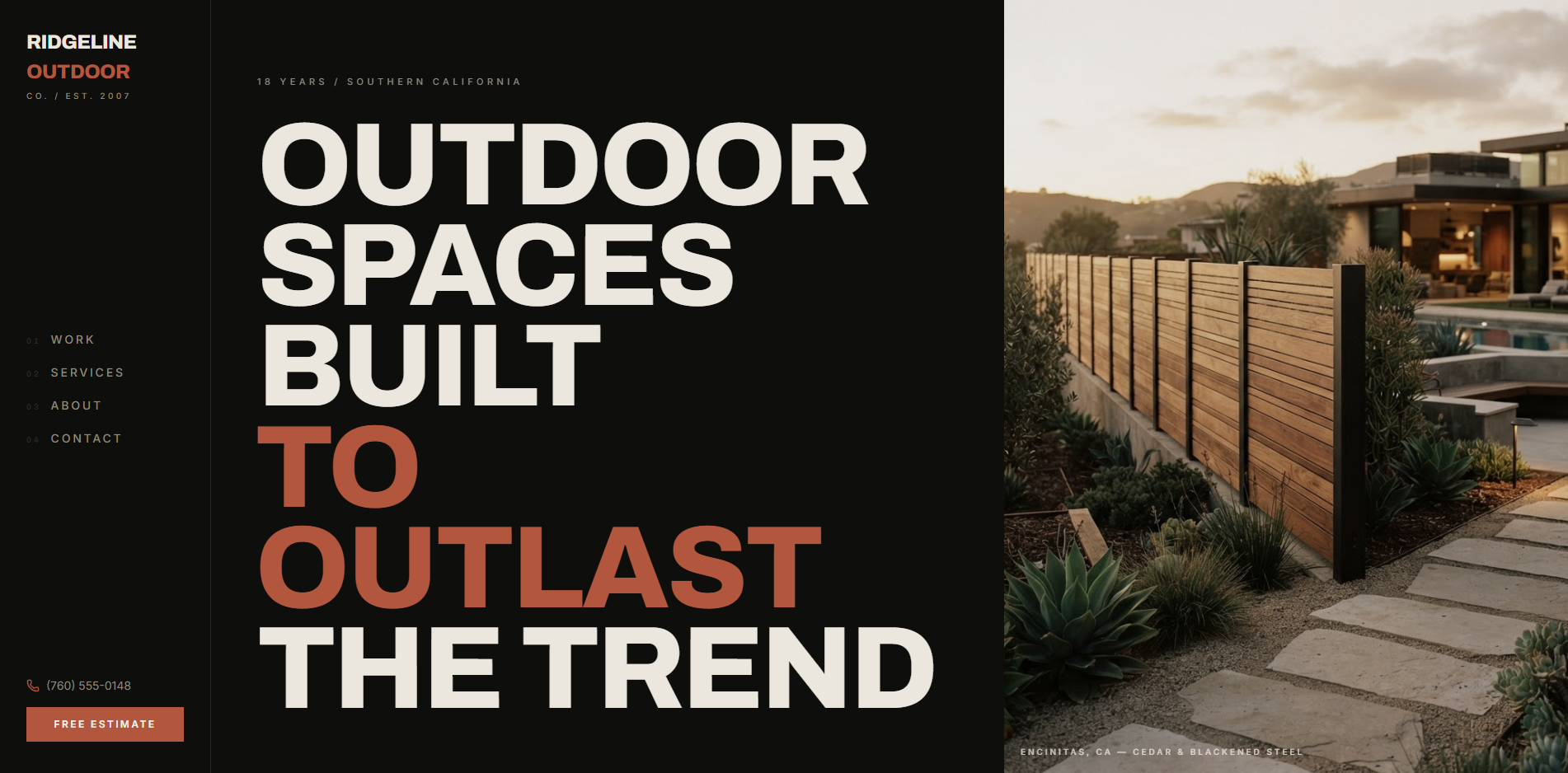
Instead of reusing a standard layout, we built Ridgeline's site around a completely different visual language than a typical home services site.
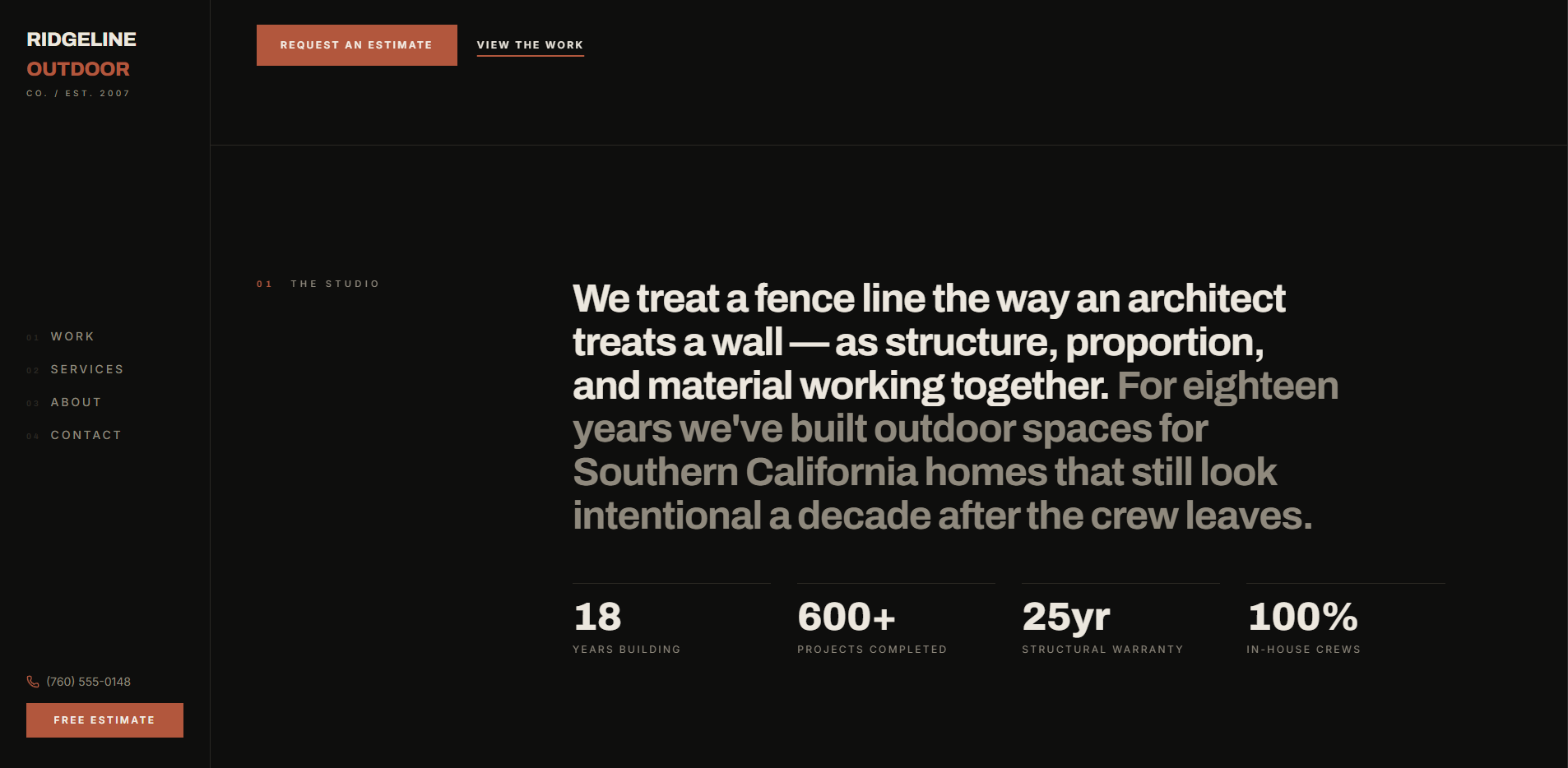
A dark, editorial aesthetic
Rather than bright light-background templates common in this space, we used a near-black background with warm off-white text and a single earthy accent color. It mirrors the materials the company actually works with steel, weathered wood, stone instead of a generic corporate blue.
Asymmetric, architectural layout
Instead of centered, evenly spaced sections, we used split-screen sections, off-grid image placement, and numbered section markers to give the site a designed, drafting-table feel that fits a company building physical structures.
Persistent sidebar navigation
Instead of a standard top nav bar, a fixed left-hand sidebar keeps the logo, nav links, and Free Estimate button always visible. The path to contact is never more than one click away no matter how far someone scrolls.
Service-focused content blocks
Each service custom fencing, stone and paver hardscape, patio structures, retaining walls, outdoor lighting, repairs gets its own full-width section with real descriptive copy instead of being crammed into a small icon grid where nothing gets explained.
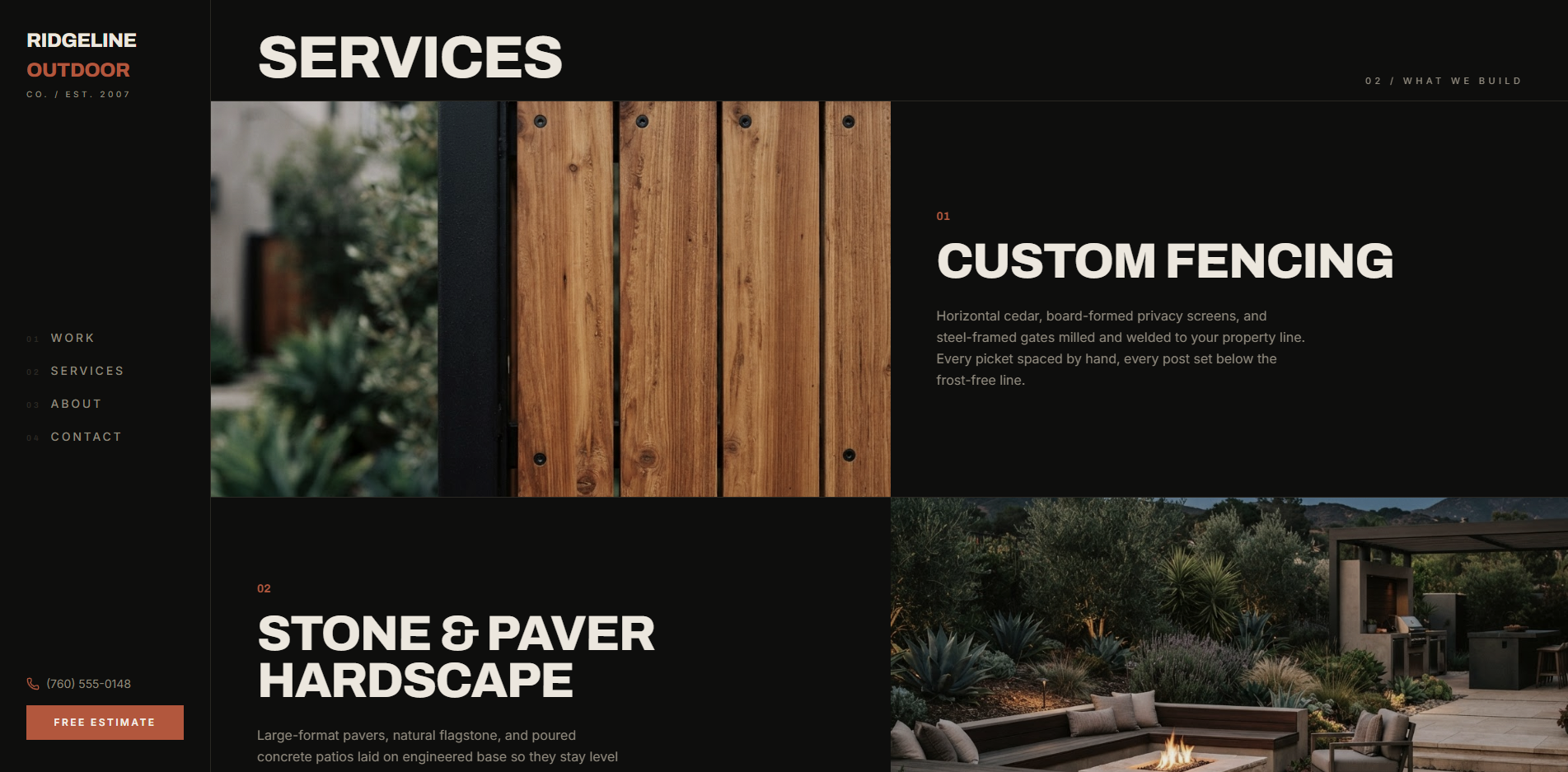
Services and About sections each with focused, descriptive copy instead of icon grids
SEO Strategy: Specific Beats Broad Every Time
Most contractor websites chase big, obvious terms like "fencing company" or "hardscape contractor." Those terms get real search volume, but they also mean competing against national directories and franchise sites that have had a decade to build domain authority. For a local operator, that fight rarely pays off.
The better strategy is targeting lower-competition, high-intent terms that match what a real buyer actually types when they already know what they want built.
Target keyword examples
- "custom steel and wood fence contractor [city]"
- "modern hardscape design [region]"
- "stone patio and retaining wall installer near me"
- "outdoor living contractor website design"
- "premium fence and hardscape company [service area]"
These have lower volume individually but far less competition and much higher buyer intent. A homeowner typing "custom steel and wood fence contractor Pasadena" is much closer to booking an estimate than someone typing "fencing company." And because the site's own copy mirrors that same specific language, Google has strong on-page signals to rank it for exactly those terms.
Ongoing Maintenance and SEO
A site like this one does not stay effective on its own. Rankings shift, competitors improve their sites, and a portfolio that never adds new projects starts to look dated fast. For a contractor in a high-ticket niche, the cost of a stale site is real.
Ongoing maintenance for a fencing and hardscape site typically covers:
- Adding completed project photos and case descriptions to the portfolio on a regular cadence so the site stays current and search engines have fresh content to index
- Monitoring local rankings for target keyword clusters and updating service page copy when positions slip
- Keeping Google Business Profile in sync with the site since map pack rankings and organic rankings reinforce each other
- Checking page speed regularly as image-heavy portfolios are the most common source of load time issues for contractor sites
- Tracking which keyword groups are actually driving estimate requests, not just visits
The Takeaway
A website for a fencing or hardscape company is not just a digital business card. It is the first impression that either matches or undercuts the quality of work being sold. The design has to look like the finished product, and the SEO strategy has to target buyers who already know what they want rather than trying to win a fight against national brands on generic terms.
That is the model behind every site we build at Lattice Local: distinct design and a keyword strategy built specifically for the niche in front of us, not a formula stretched across every trade.
Ready to compete?
Your craftsmanship deserves a web presence that matches it.
If your site is not doing your work justice, let's fix that. Design and SEO strategy built specifically for your trade.
Start Your Project