Case Study Custom AV Integration / Web Design
Website Design for Custom Home Theater & AV Integrators: The Blackbox Case Study
Client
Blackbox
Location
Silicon Valley, CA
Industry
Home Theater & Smart Home AV
Scope
Web Design + SEO Strategy
32+
Consult Requests
60
Days to Page One
2.4x
Average Project Value
0
Big-Box Comparisons
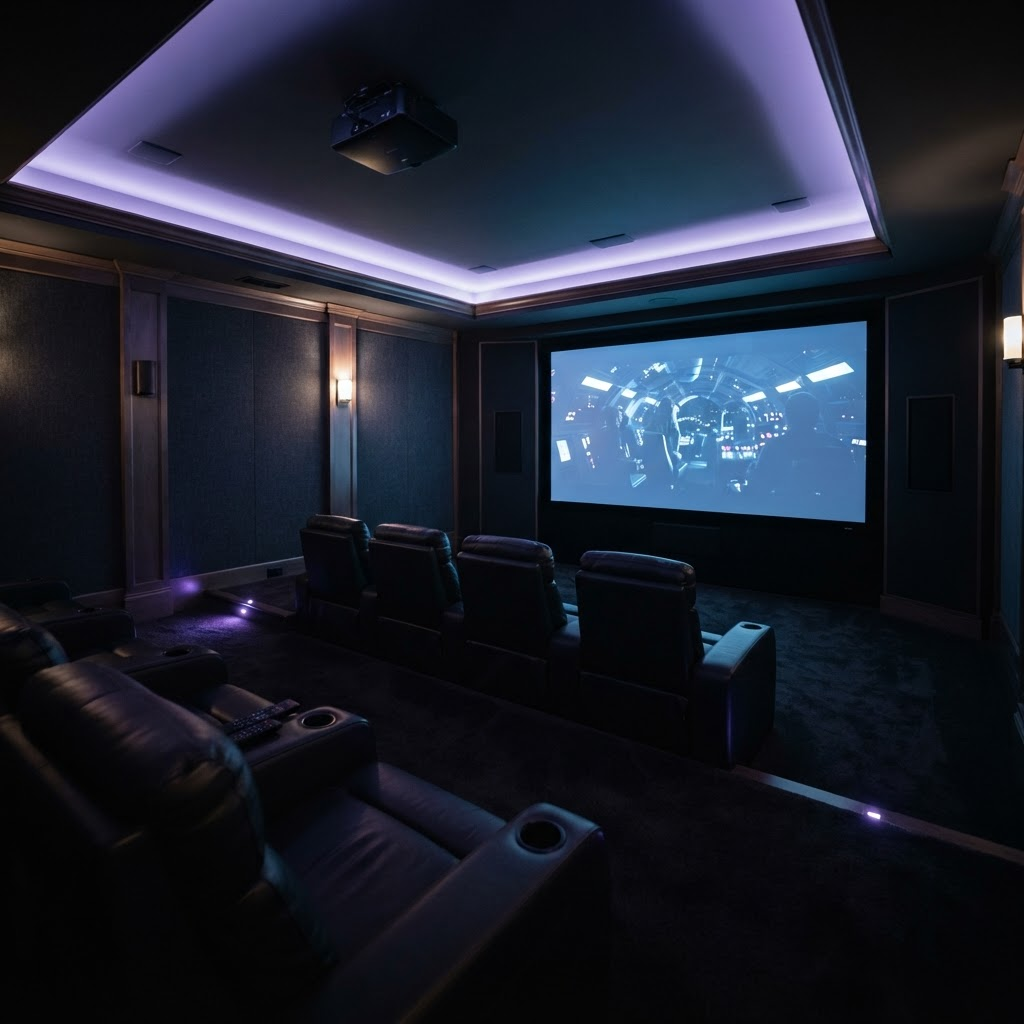
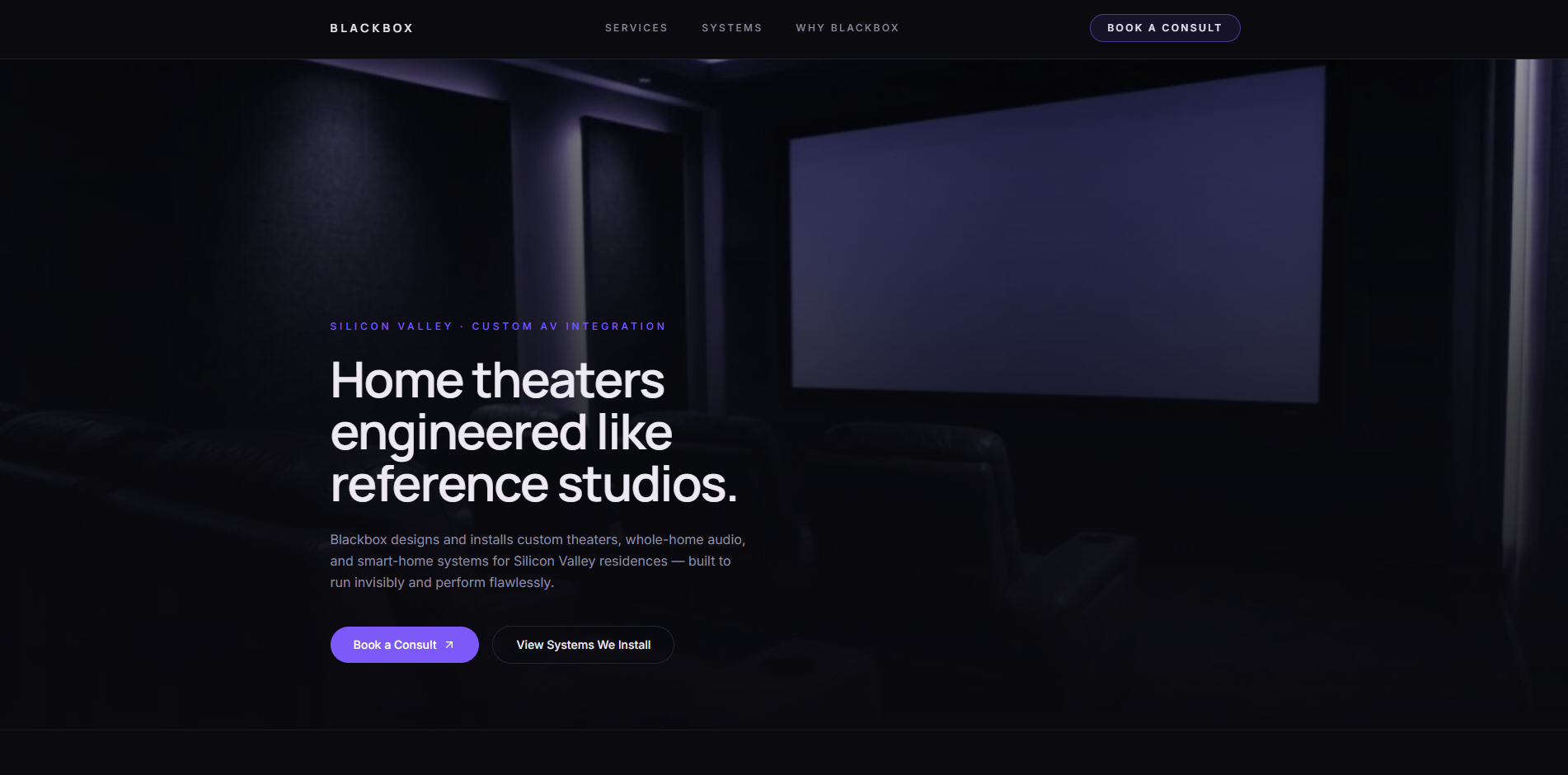
Blackbox designs and installs custom home theaters, whole-home audio, and smart-home systems for Silicon Valley residences, built to run invisibly and perform flawlessly. That last part, invisible, is exactly what made the old website a problem: the craft behind the work was nowhere to be seen online, and the site read like every big-box installer selling the same soundbar to everyone.
The Problem: Reference-Grade Work, Big-Box Search Results
Search “home theater installer” anywhere in Silicon Valley and the results are dominated by national retailers and franchise smart-home installers running near-identical template sites. Blackbox's actual work, discreet in-wall wiring, THX and CEDIA-certified installation, acoustic tuning done to reference-studio standards, was indistinguishable from a Saturday soundbar install in that lineup.
For a client spending five or six figures on a theater or a whole-home system, the buying decision hinges on trust before a single quote is requested. A generic site does not just fail to impress that client, it actively signals the wrong tier of installer.
“The site has to prove precision before it says a single word about it.”
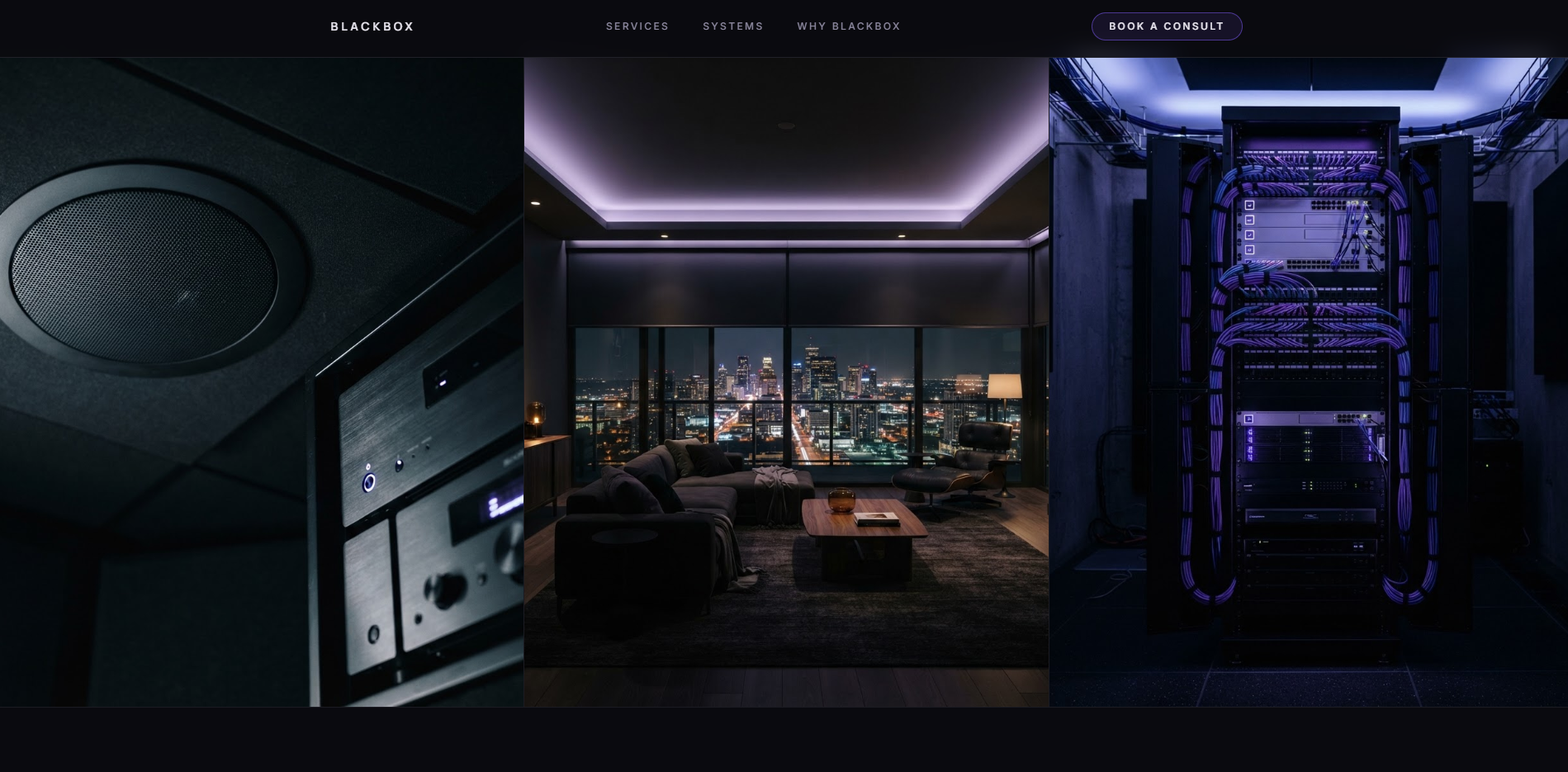
Proof-first photography strip: gear, finished room, and infrastructure, before a single headline
The Problem With Most AV Integrator Websites
When we looked at existing sites in the custom AV and smart-home space, the pattern was consistent. Stock photography of generic living rooms. Vague copy about “smart home solutions” that could describe any installer. Trust signals, if they existed at all, buried under decorative icon grids instead of stated plainly.
For a niche where the buyer is often a homeowner who has already been burned by a bad installer once, or is comparing a boutique integrator against a national retailer, a templated site actively works against the sale. The site has to look like the finished install feels: precise, discreet, and built by people who obsess over details you will never see.
If you are searching for something like “website design for home theater installers” or “AV integration company website design,” this is the core idea: proof has to load before persuasion.
Our Design Approach
Instead of a headline-first layout common in this space, we built Blackbox's site around proof before persuasion, using the same restraint the company applies to a finished install.
A near-black canvas, one violet accent
Rather than the blue-and-white palette most smart-home brands default to, we used a near-black background with a single violet accent, the same color as the LED coves and cable management in Blackbox's own installs. It signals technical precision instead of consumer tech.
Photography before headlines
The homepage opens with a full-bleed strip of real installation photography, an amplifier, a finished theater room, a server rack, before a single word of marketing copy. The work has to earn the headline, not the other way around.
A five-discipline grid instead of vague copy
Instead of "smart home solutions," the "What We Build" section lists five specific disciplines: theaters, whole-home audio, lighting and shades, AV integration, and networking, each with real scope. Buyers self-qualify in seconds instead of guessing what the company actually does.
Trust signals stated plainly
Certified Installers, Discreet Wiring, and Warrantied Equipment sit in three clean columns with a single icon each, no decorative badge wall. The credibility comes from the specificity of the claim, not the number of icons on the page.
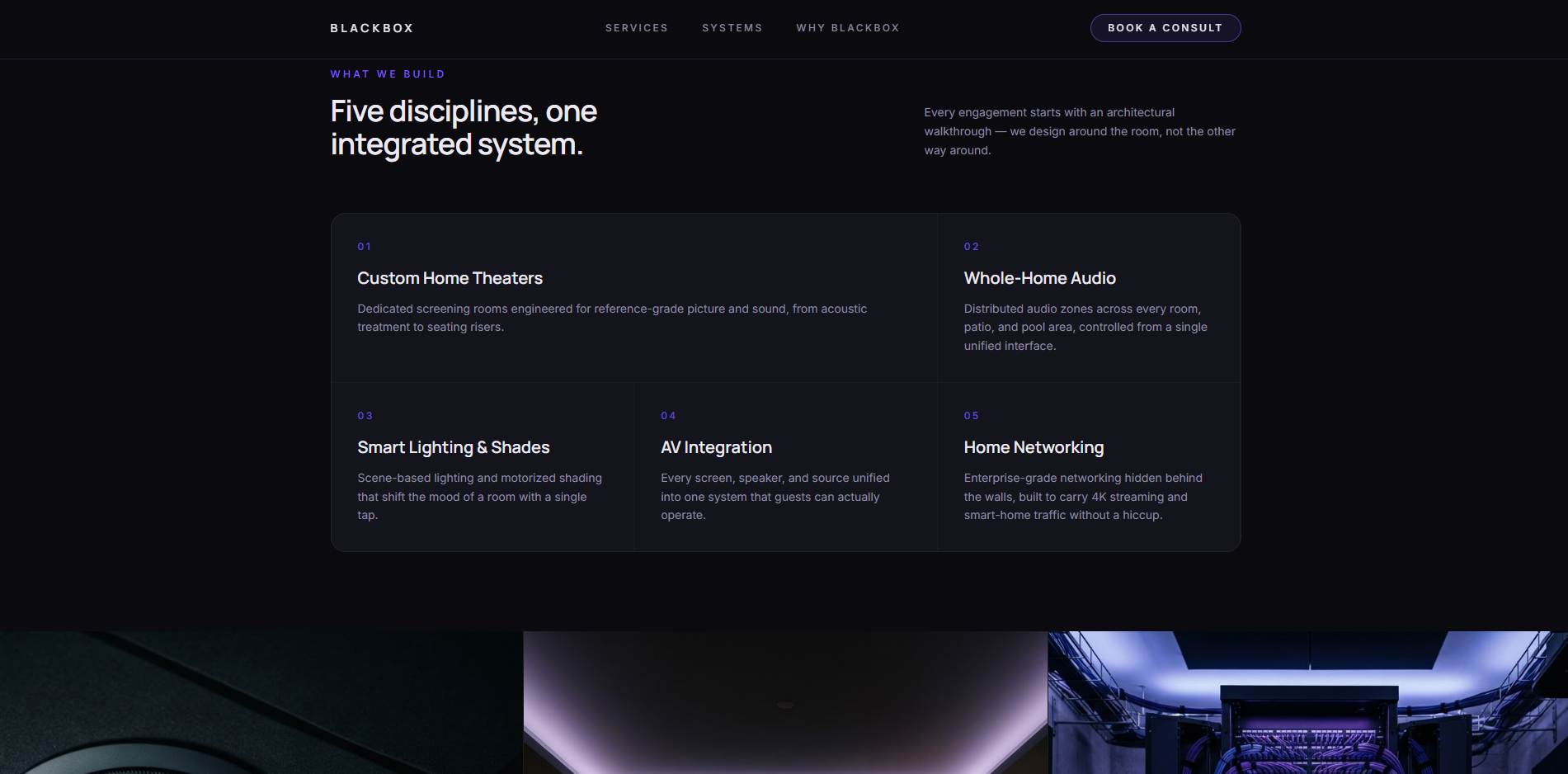
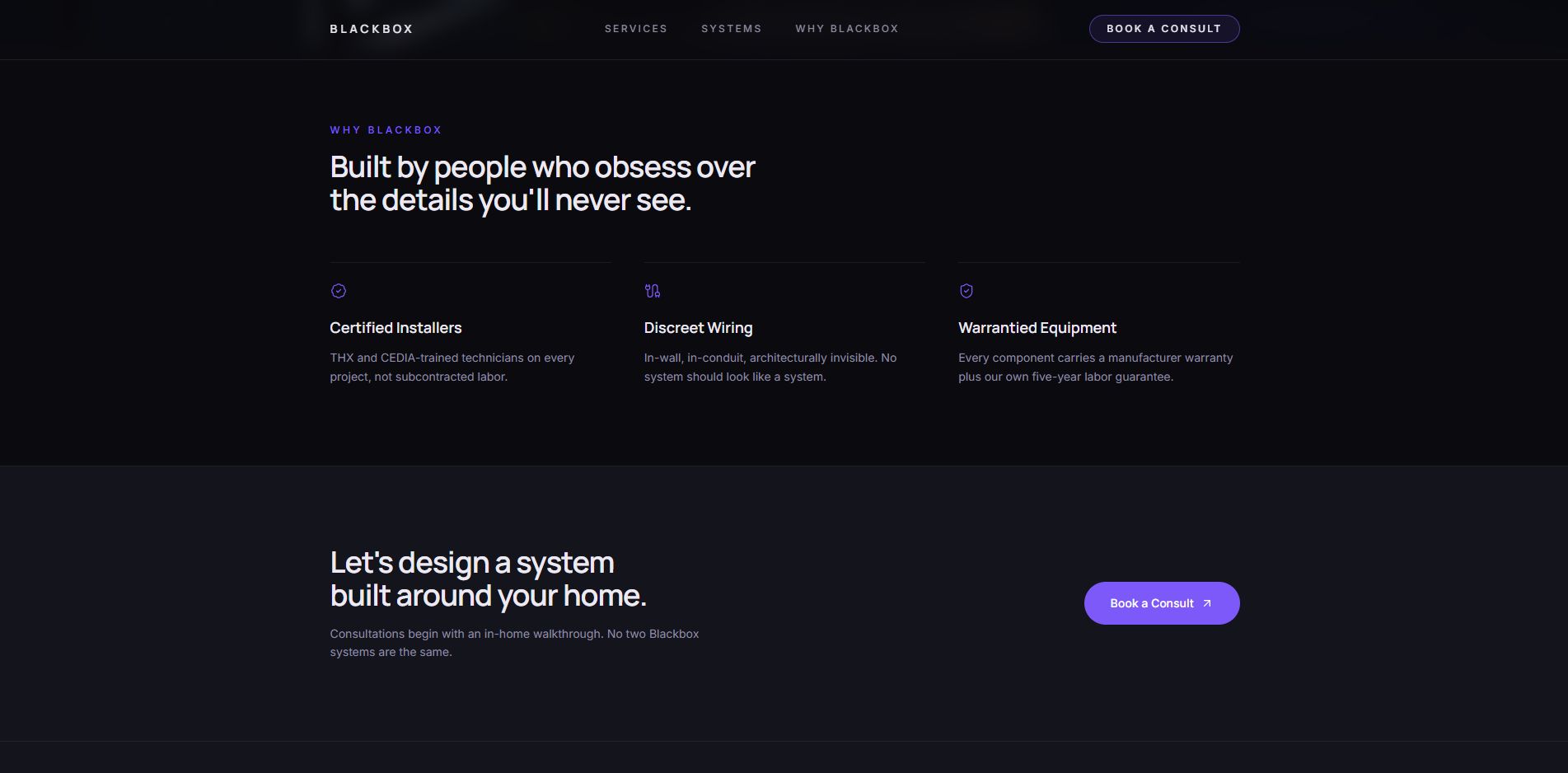
A specific five-discipline breakdown and plainly stated trust signals, instead of icon grids and vague claims
SEO Strategy: Outrank the Big Box, Not Just the Boutiques
Most AV integrator sites chase broad terms like “home theater installation” or “smart home company.” Those terms carry volume, but the top results are national retailers and franchise installers with a decade of domain authority behind them. For a boutique integrator, that fight is close to unwinnable.
The better strategy is targeting specific, high-intent terms that match how someone who has already decided against the big-box option actually searches.
Target keyword examples
- "custom home theater installer [city]"
- "whole-home audio integration Silicon Valley"
- "smart home AV integrator near me"
- "discreet home automation installation [region]"
- "reference-grade home theater design [city]"
These terms have lower volume individually but far less competition and much higher buyer intent. Someone typing “discreet home automation installation Palo Alto” already knows they do not want a Geek Squad visit. Because the site's own copy uses that same specific language across the What We Build section, Google has strong on-page signals to rank it for exactly those searches.
Ongoing Maintenance and SEO
High-end AV and smart-home is a fast-moving category, new gear, new protocols, new competitors running paid ads on the exact terms a site ranks for organically. A site that does not evolve loses ground quietly.
Ongoing maintenance for an AV integrator site typically covers:
- Adding completed installs to the portfolio with specific gear and room details so search engines and buyers both have fresh, specific content
- Monitoring rankings for core Silicon Valley AV terms and updating page copy when franchise installers push into the local pack
- Keeping certifications, brand partnerships, and warranty terms on the site current as manufacturer relationships change
- Checking page speed regularly since full-bleed photography is the most common source of load time issues on a site like this
- Tracking which keyword groups are actually converting to consult requests, not just traffic
The Takeaway
A website for a custom AV or home theater integrator is a credibility test before it is anything else. The design has to prove the same precision the client is paying for, and the SEO strategy has to target buyers who have already ruled out the big-box option rather than competing head-on against retailers with a decade of domain authority.
That is the model behind every site we build at Lattice Local: distinct design and a keyword strategy built specifically for the niche in front of us, not a formula stretched across every trade.
Ready to compete?
Your installs deserve a site as precise as the wiring behind the wall.
If your site is not doing your craftsmanship justice, let's fix that. Design and SEO strategy built specifically for your trade.
Start Your Project